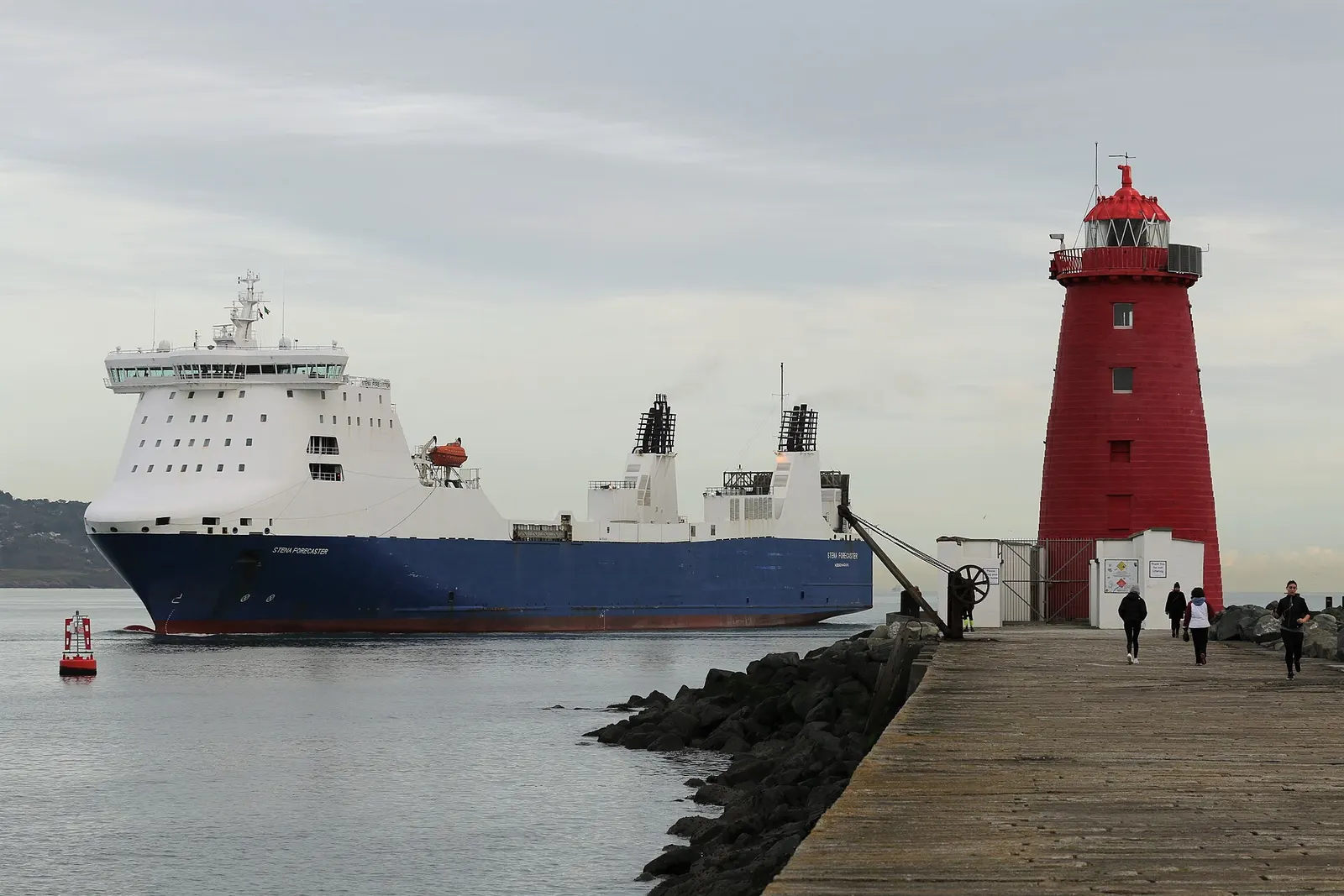
Train straight onto the boat
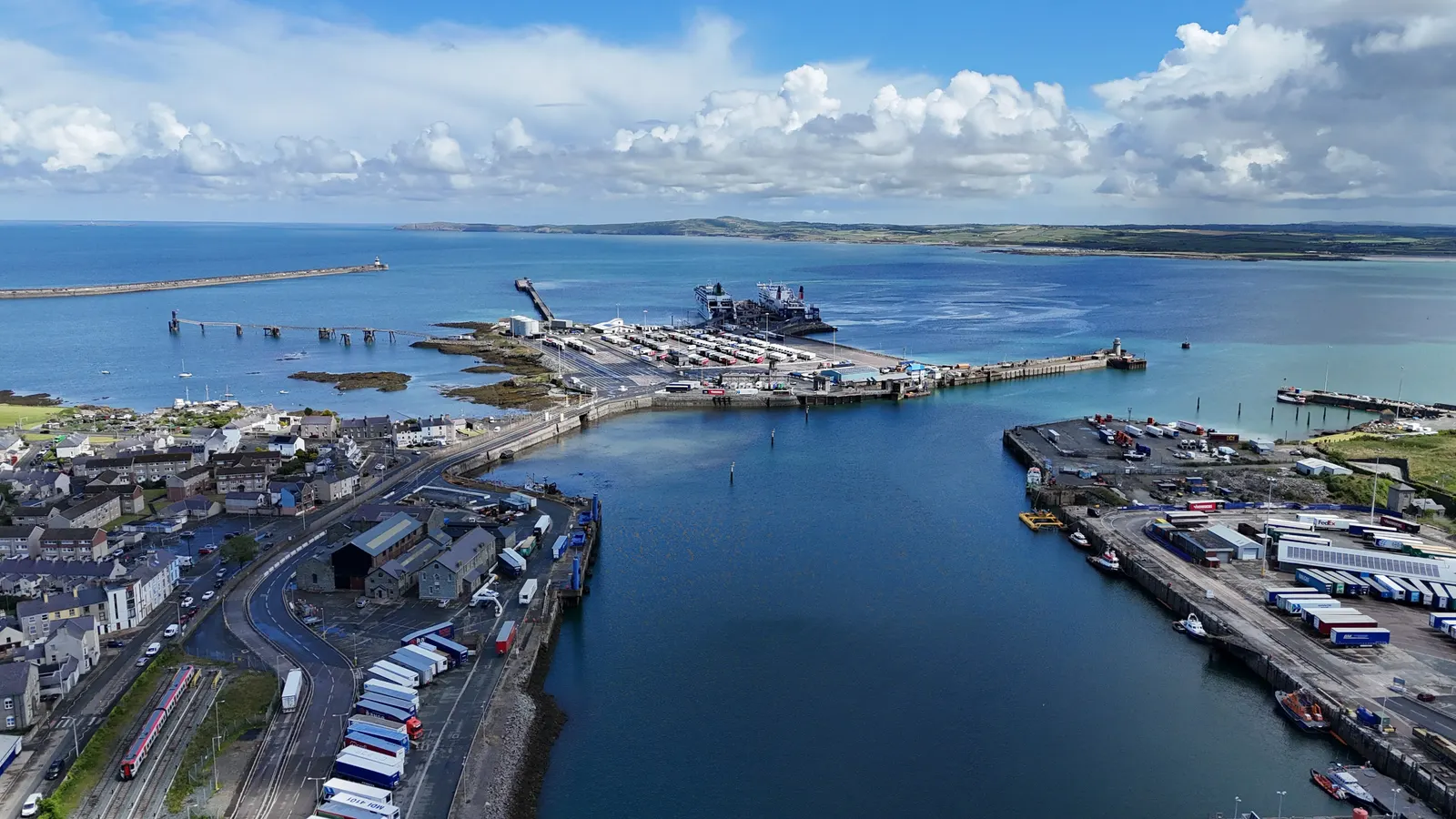
The railway station is within the terminal complex, so you step from the train to the boat. Trains connect Holyhead with Chester, Liverpool, Manchester, Birmingham and London. Stena Line's terminal also sells train tickets.
Holyhead is in the county of Anglesey, in North Wales. Liverpool is about 110 km away, and Liverpool John Lennon Airport about 120 km.
Driving to Holyhead
The port is at the end of the A55, the North Wales Expressway, and the A5 also leads there. Stena Line gives driving times to the port from Chester, Liverpool, Manchester and Birmingham in its description of Holyhead, and Chester is the closest of the four. Add time for check-in on top of whatever your satnav says.
Two operators, two addresses
Irish Ferries calls its building Holyhead Terminal, postcode LL65 1DR, on Anglesey in North Wales. Stena Line gives its address as Holyhead Port (Stena House), Station St, LL65 1DQ. The postcodes differ per operator, so use the one on your own ticket when you enter the destination in a satnav.
Both operators set the latest check-in at 30 minutes before departure for a car, and 40 minutes for pedestrians. Irish Ferries applies this to cars, vans and campers and to pedestrians and cyclists. Stena Line says the times differ per port and that the exact ones are on your e-ticket.
Parking at the port
Near the main building there is a short stay area for dropping off and picking up, with a maximum of 20 minutes. Two long stay car parks are by the port gate, within walking distance. Stena says long stay car park 1 has a height limit of 2.4 m and car park 2 a limit of 2.1 m, so a roof box or a tall van needs checking. There are spaces for disabled drivers and two charging spaces for electric cars.
Inside the Stena terminal
Stena's terminal has ticket counters, toilets, a baby changing room, a passenger lounge, vending machines, wifi, help for passengers with a disability, train ticket sales, charging points and a tax-free shop.
Cars, vans and cabins
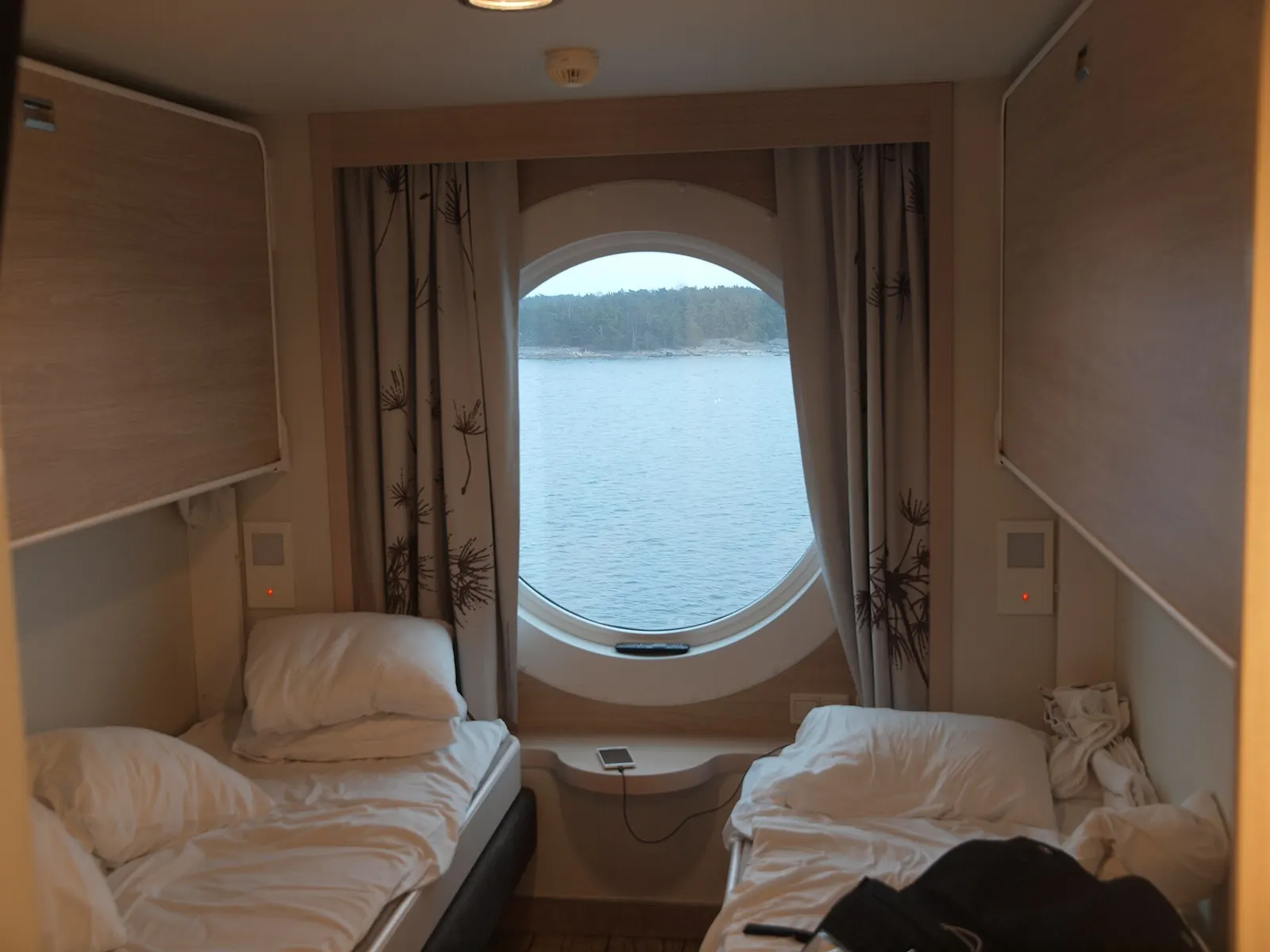
Both Irish Ferries and Stena Line carry cars and list cabins. Irish Ferries books vans and commercial vehicles higher than 2.6 m and/or longer than 6.00 m as freight, and it does not say anything on its page about LPG, campers, motorcycles or bicycles. Irish Ferries also tells electric car owners that the Ulysses has six charging points on the crossing, and that you should bring your own cable and arrive at least an hour early.
Pets on the Irish Sea
With Irish Ferries you give the animal's details at booking, for up to 5 animals per booking. The animal may stay in your vehicle, go in a kennel on the car deck or use the Pet Den, and only the James Joyce has a pet cabin. Stena Line allows a pet in the car, a kennel or a pet cabin and makes advance booking compulsory, even for foot passengers.
Irish Ferries asks for a chip that matches the passport, and either a valid EU pet passport or a GB health certificate, plus a rabies vaccination at least 21 days earlier. Muzzles are needed for breeds that can bite or are restricted, and Stena Line bans some breeds, among them the XL Bully and the Pitbull Terrier. Stena Line wants a dog to be at least 12 weeks old at the time of the rabies jab.
Arriving in Dublin Port
You arrive at the north side of the mouth of the Liffey, at East Wall and North Wall. Irish Ferries uses Terminal 1 on Terminal Road South, and Stena Line uses Terminal 2 on Alexandra Road, D01 WD28. The Dublin Port Tunnel links the port with the M50 and the M1, and the M50 is a toll road without a toll booth, so you pay afterwards. Dublin Airport is about 10 km away.
There is no direct train. Dublin Bus route 53 runs between Talbot Street and Terminal 1, and Stena Line has a bus between the port and Georges Quay in Dublin 2. Taxis wait at Terminal 2.
Other routes into Dublin
Dublin is reached from several British ports. Douglas on the Isle of Man is 95 km from Holyhead and sails to Dublin in about 5 hours to 5 hours 30 minutes. Liverpool and Liverpool Birkenhead are both 110 km away. Cherbourg to Dublin takes about 20 hours.