A short crossing, day and night
Calais is the French city closest to England, and the ferry makes the most of it. The crossing to Dover is 61 km and takes about 1 hour 30 minutes to 1 hour 50 minutes. There is no night boat with a whole night on board, because the crossing is too short, but boats also sail at night, so you can plan your journey around a night sailing too.
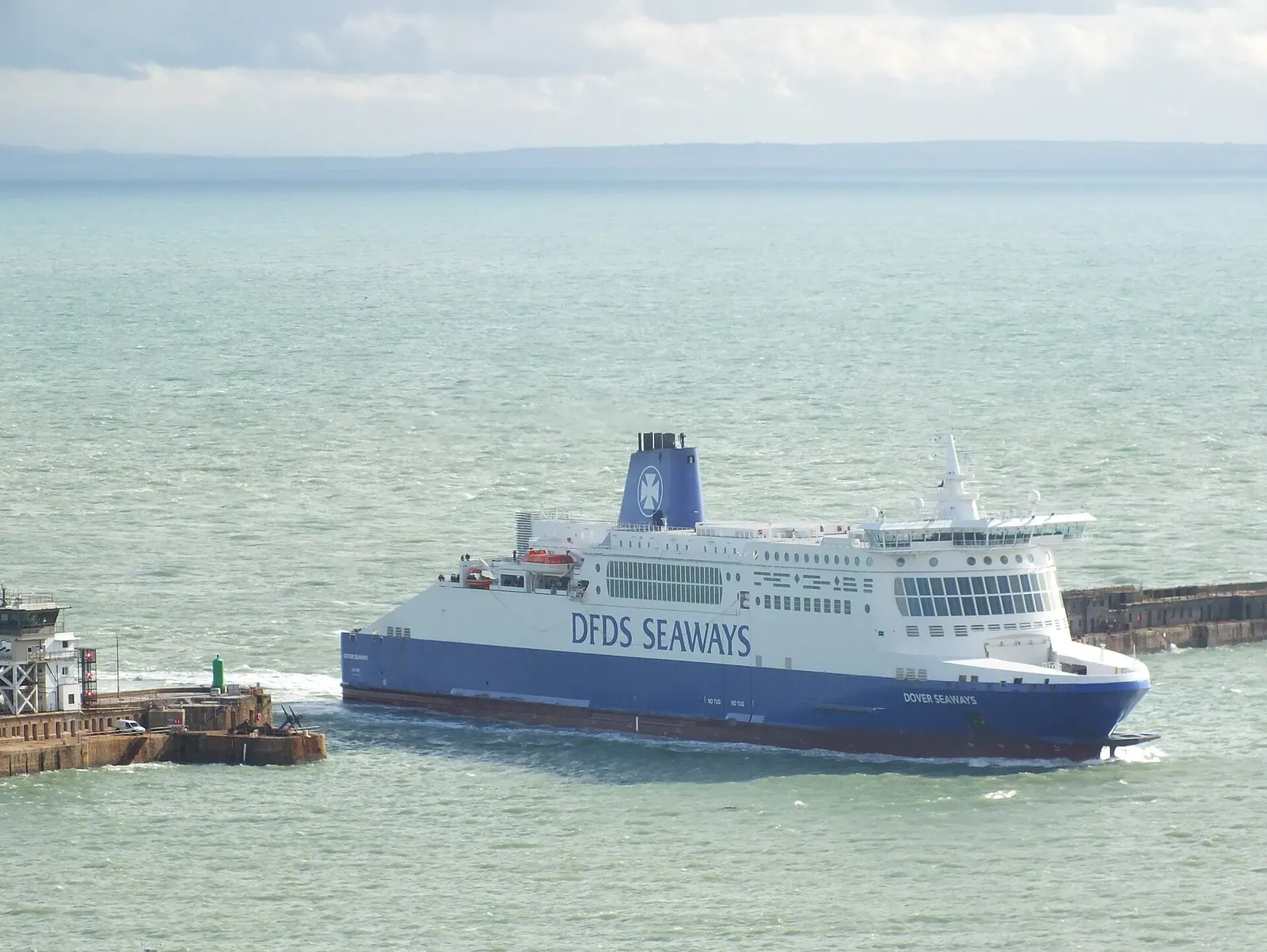
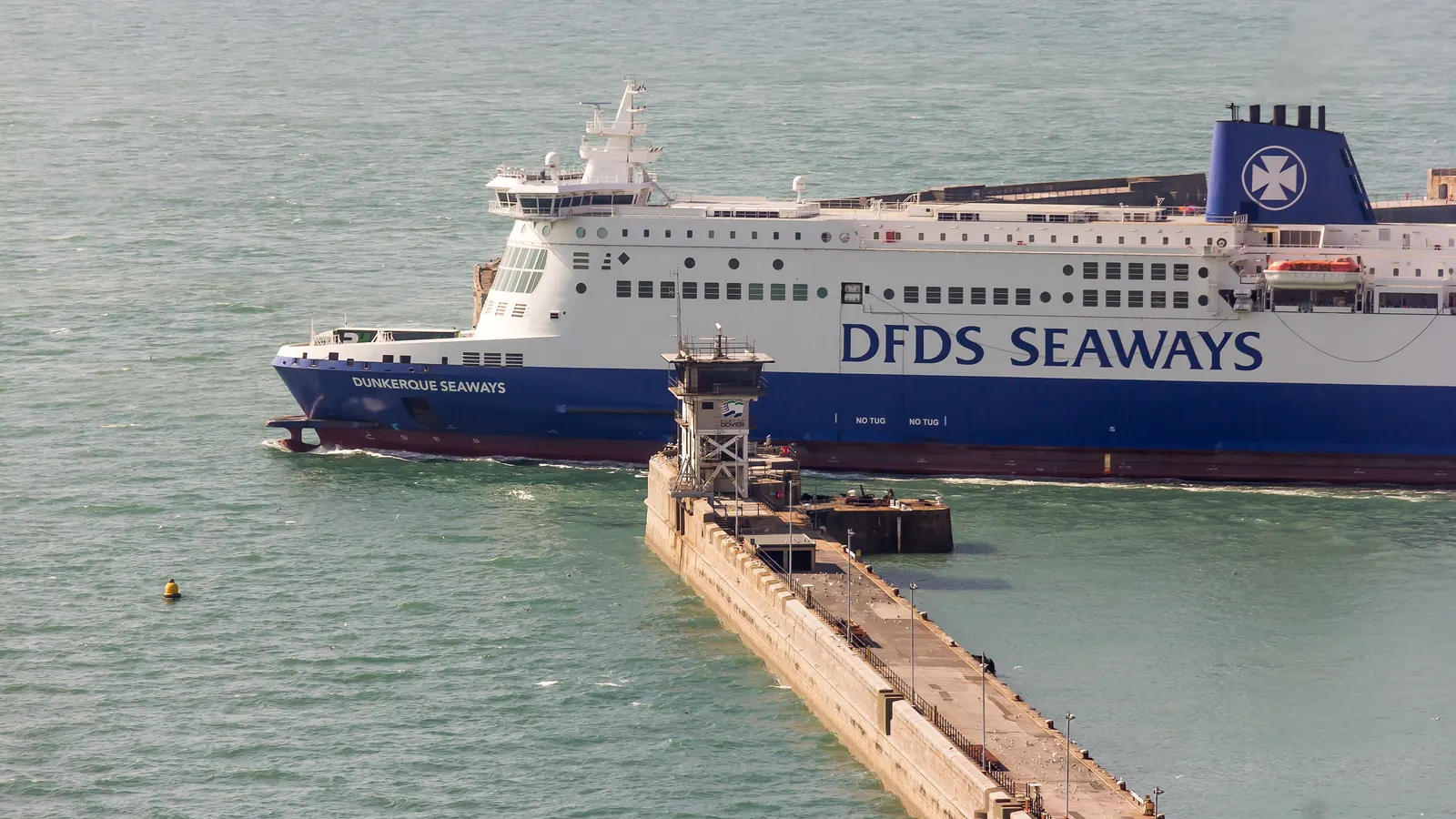
Three operators are linked to the route. Irish Ferries runs it with the ships Isle of Inishmore and Oscar Wilde. P&O Ferries has its head office in Dover itself. DFDS Seaways also sails from Dover to Calais and to Dunkirk. Which operator you sail with decides the check-in rules, so look at your ticket before you leave home.
Finding the port of Calais
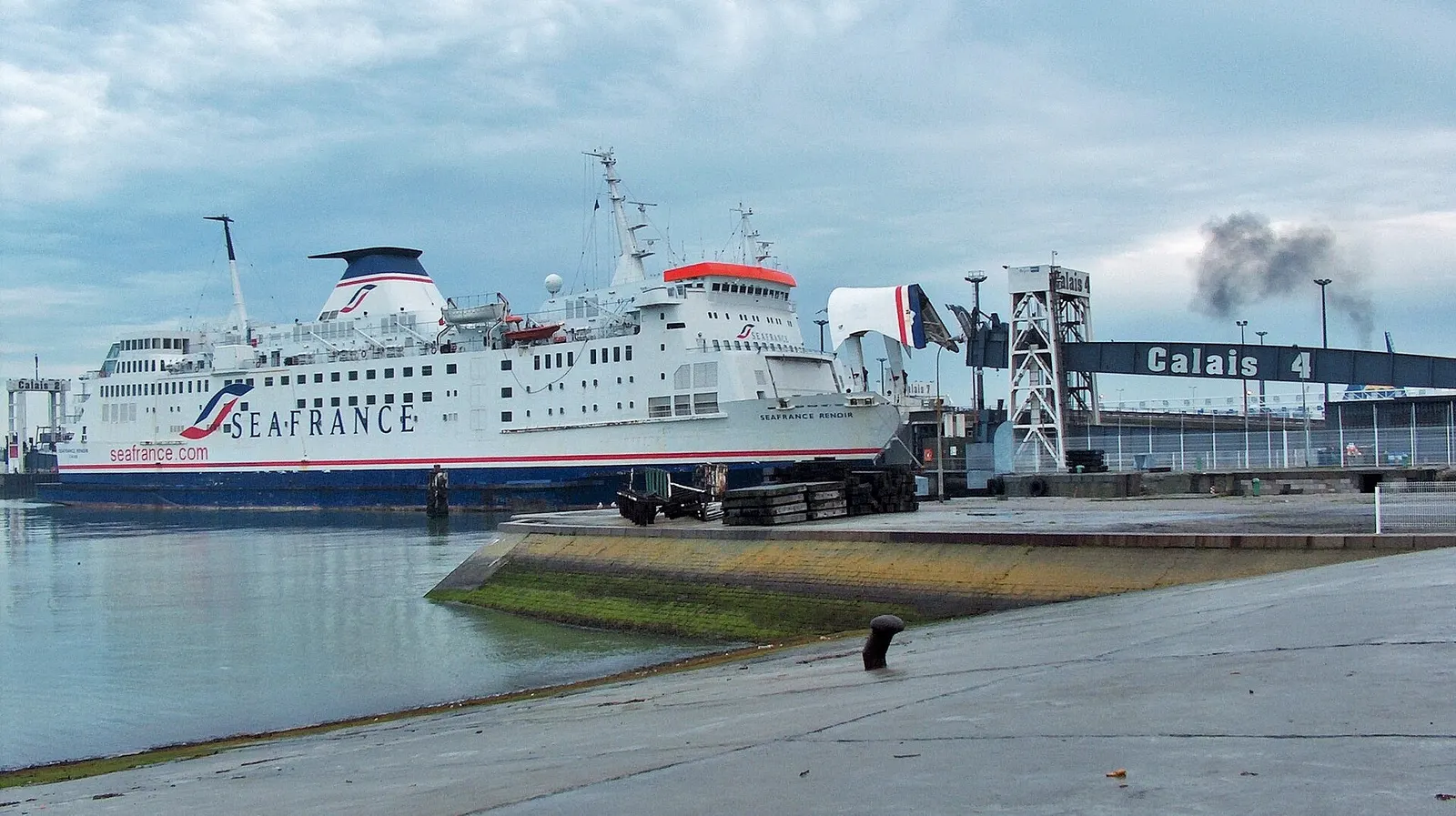
The port, Port Boulogne-Calais, is at 285 avenue du Mérite Maritime. The ferry terminal stands at the entrance to the port and has an ochre front, a nod to the lace for which Calais is known. You can drive straight to it from the A16 and A26 motorways, or from the centre of Calais. Follow the signs for 'car ferry'.
Calais lies in the Pas-de-Calais department, in the Hauts-de-France region, about 90 km from Lille. For the rest of the journey, a car is the simplest way to reach the port, because the port's own information is aimed at drivers.
Checking in and border control
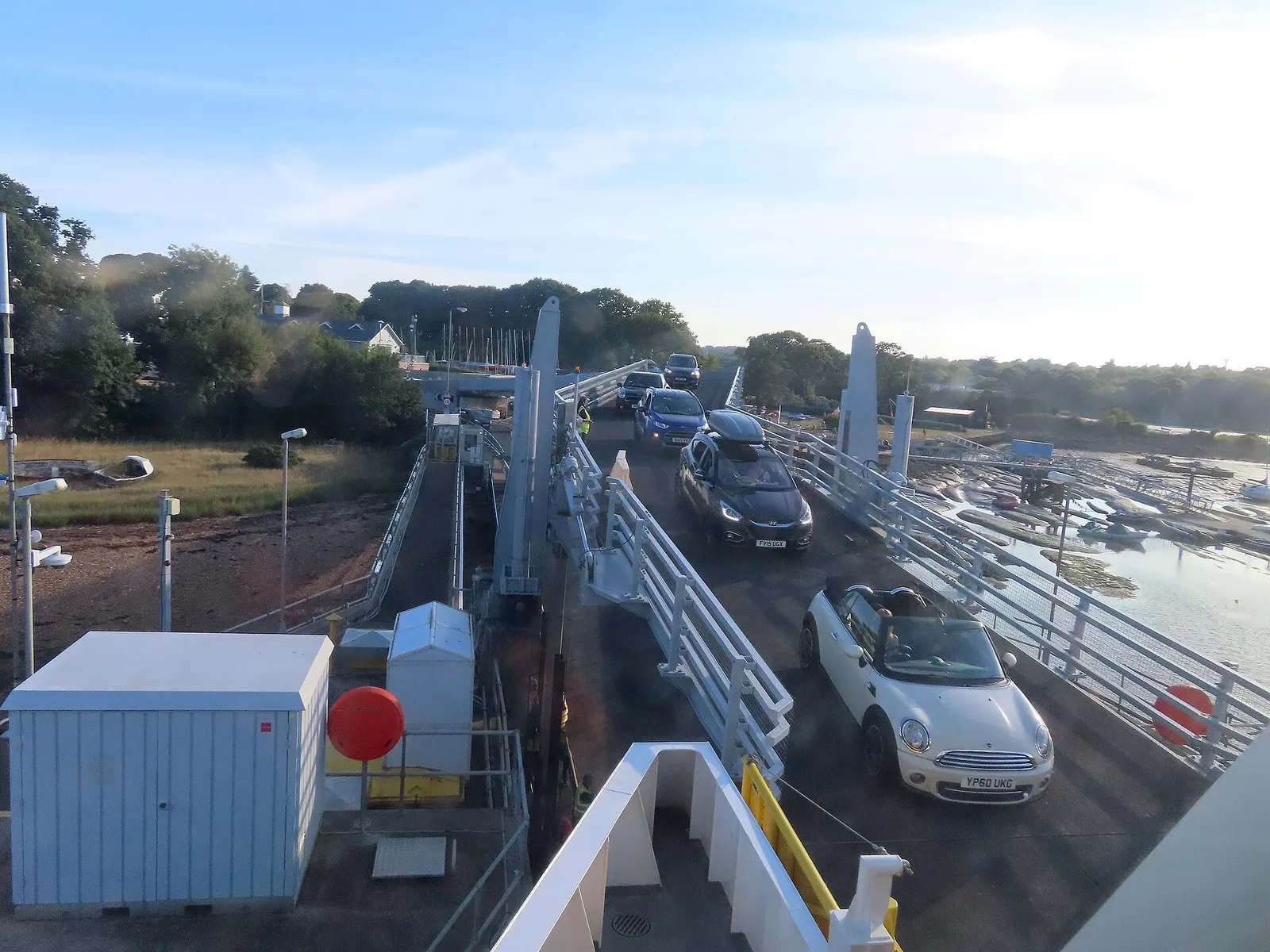
At the port gate you report to the office of your operator without getting out of the car. After that come the French border control and then the British one, and finally the queue for boarding that is printed on your ticket. Keep your travel documents within reach for all three steps.
The port itself asks you to arrive at least 60 minutes before departure. In busy periods such as summer, the end of the year and Easter, some operators ask for up to 2 hours. Irish Ferries gives 2 hours for a coach and 1 hour for a motorcycle or any other vehicle on its Great Britain to France crossings, and it points out that at Calais the border control comes after check-in, so you need time for both. DFDS Seaways closes check-in 60 minutes before departure on Dover to Calais and advises allowing 120 minutes in high season.
If you booked through a travel agent, find out which operator is actually carrying you. Intermediaries have no check-in desk in the port.
Car, van and foot passengers
Irish Ferries and P&O Ferries take cars on this route. Irish Ferries books vans and commercial vehicles that are higher than 2.6 m and/or longer than 6.00 m as freight. For other vehicles its page gives no limits, and it says nothing about LPG, motorhomes, motorcycles or bicycles, so ask before you book if you travel with one of them.
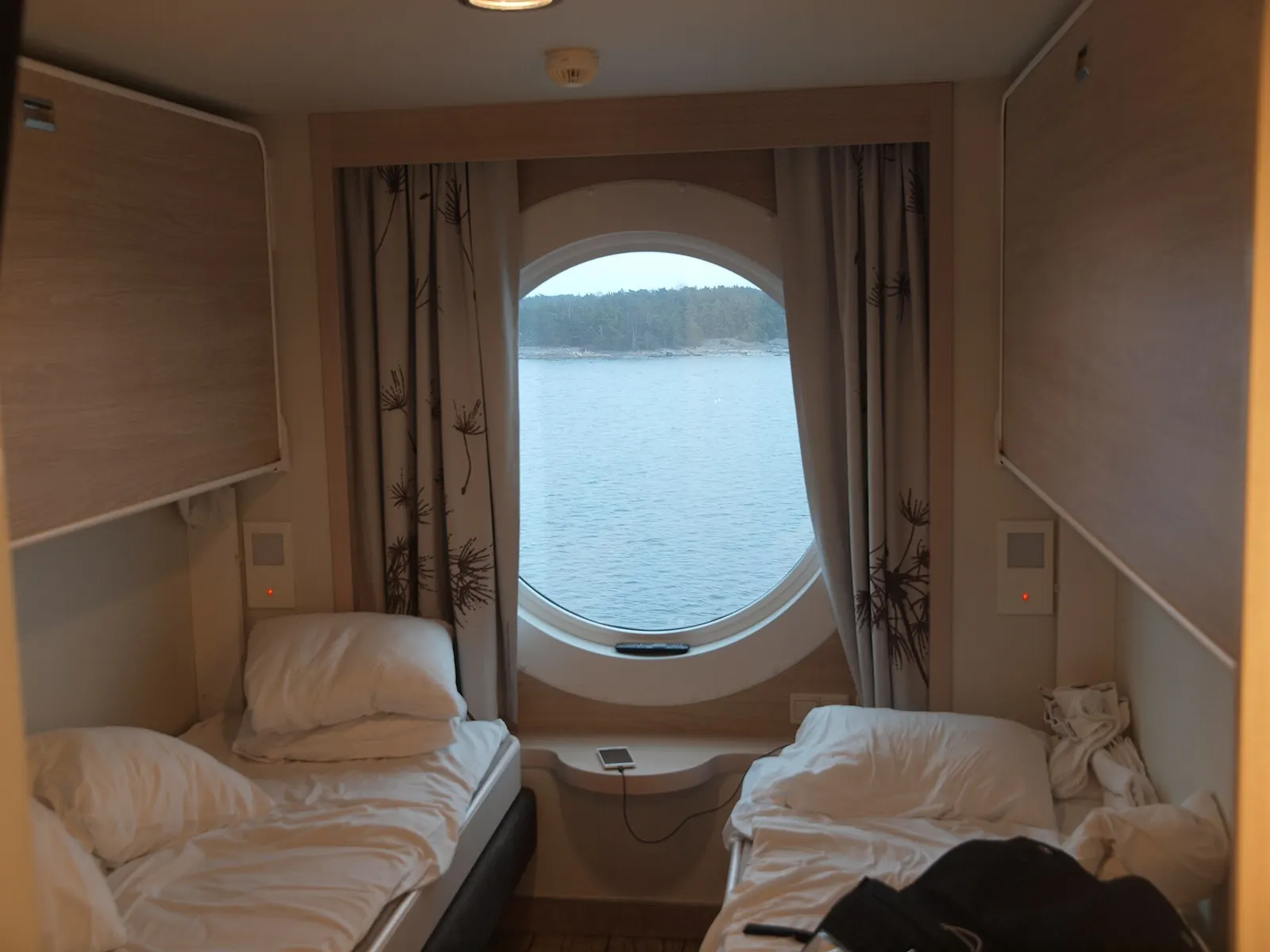
DFDS Seaways does not accept foot passengers on Dover to Calais and Dunkirk. It also sets no fixed luggage limit on its UK to France routes: the space in your vehicle decides. Irish Ferries lists cabins on its fleet, which you can request when you book.
Taking a dog or cat
Tell the check-in staff in Calais that you travel with a pet. Irish Ferries lets the animal stay in the vehicle or go to the Pet Den, an indoor lounge with an outside walkway, where available when you book. A motorcyclist with a pet has to use the Pet Den, and Irish Ferries asks pet owners on Dover to Calais to check in 90 minutes before departure. DFDS Seaways wants the pet booked in advance and kept in the vehicle, with visits possible through Guest Services.
Irish Ferries asks for a microchip that matches the passport, a valid EU pet passport or GB health certificate, and a rabies vaccination at least 21 days earlier for dogs, cats and ferrets. Dogs need a tapeworm treatment 24 to 120 hours before arrival on some crossings. Outside the vehicle or carrier the animal stays on a lead, and breeds that can bite or are restricted wear a muzzle.
While you wait in the port
The port has a tax-free shop. At the old terminal there is a self-service restaurant, Le Bistrot du Port, which serves lunch only. Pedestrians use the marked footpaths. The port also has an app that you open with a QR code on its website: enter your line number and it shows your boarding lane.
Arriving at Dover
Boats from Calais berth at Dover Ferry Terminal in the Eastern Docks. From there the M20 and A20 lead towards Folkestone and the M2 and A2 towards Faversham. London is about 70 miles away, and Gatwick, the nearest airport with direct worldwide flights, about 78 miles by the M20 and M25, around 1 hour 20 minutes by car.
Without a car, the nearest station is Dover Priory, a little over 1 mile from the terminals and about 25 minutes on foot. Bus 66 runs from Dover Priory to the Eastern Docks, roughly 30 minutes according to the port. High speed trains on HS1 take a little over an hour from Dover Priory to London. There is a taxi rank at the passenger terminal for drop-off and another at Dover Priory station.
Other crossings to England
Calais is only one of several ways to reach England. Dunkirk to Dover takes about 2 hours to 2 hours 30 minutes, and Dunkirk lies 40 km from Calais. Boulogne-sur-Mer, 30 km away, also sails to Dover. Further along the coast, Dieppe to Newhaven takes about 4 hours to 6 hours and Caen to Portsmouth about 6 hours to 8 hours.
From the Netherlands, Hook of Holland to Harwich takes about 6 hours to 10 hours, and from Ostend, 80 km from Calais, there is a crossing to Ramsgate. Zeebrugge, 100 km away, sails to Hull.